Do you love playing outside? Do you worry about tiny bugs? Ticks can be a problem. They can latch onto you. You might wonder, do showers remove ticks? Let’s find out how to stay safe. We will learn about ticks and how to get rid of them.
Ticks are small and can carry germs. These germs can make you sick. It is important to protect yourself. Knowing what to do can help. So, what should you do if a tick bites you?
Taking a shower is part of good hygiene. But is it enough to remove ticks? We will explore this question. We will give you the best ways to stay tick-free. Let’s learn about ticks and showers!
Key Takeaways
- Checking your body for ticks is very important after being outside.
- Use tweezers to remove ticks carefully and completely from your skin.
- Showering soon after being outdoors can help wash away unattached ticks.
- Do showers remove ticks that are already attached? Probably not, so check carefully.
- See a doctor if you get a rash or fever after a tick bite for proper care.
Can Showers Help Remove Ticks?
Taking a shower feels great after playing outside. You wash away dirt and sweat. But can showers help remove ticks? A shower can wash off ticks that have not attached yet. The water and soap can knock them off. This is a good way to prevent tick bites. However, showers are not a perfect solution. Ticks that have already bitten you will likely stay attached. They have strong mouthparts that grip your skin. You need to do more to remove them safely. Always check your body for ticks after being outside, even if you shower.
- Showers can wash away ticks that have not attached.
- Ticks that are already biting will likely stay attached.
- Check your body carefully after being outside.
- Use soap and water in the shower for the best effect.
- Showers are not a perfect way to remove all ticks.
- Remove attached ticks with tweezers.
Think of it like this: Imagine you are building a fort outside. You get dirt and leaves on your clothes. A shower helps wash away the loose dirt. But if you glued leaves to your shirt, the shower won’t remove them. You need to peel them off carefully. Ticks are similar. A shower helps with the loose ones. You must remove the attached ones yourself. Always ask a grown-up to help you check for ticks. They can see places you cannot, like your back.
Will Soap and Water Work?
Soap and water are great for cleaning your body. They can remove dirt and germs. But will soap and water work to remove attached ticks? Soap can make it harder for ticks to hold on. The slippery surface might help to dislodge them. However, soap alone is usually not enough. Ticks are very good at staying attached. You need to use tweezers to remove them safely. After removing the tick, clean the area with soap and water. This will help prevent infection. Washing with soap and water is a good step, but not the only step.
How Long Should You Shower?
Do you know how long you should shower to help remove ticks? A quick rinse won’t do much. Showering for a few minutes can help. Spend at least two to three minutes washing well. Focus on areas where ticks like to hide. These areas include your armpits, groin, and hair. Use soap and water and scrub gently. Remember, this is to wash away unattached ticks. You still need to check for attached ticks after your shower. A longer shower is better than a short one. But it is not a substitute for a thorough tick check.
What Temperature Is Best?
When showering to remove ticks, what temperature is best? Hot water might feel good. It can also help to loosen ticks. However, very hot water can also burn your skin. Warm water is a better choice. It will help wash away ticks without hurting you. The temperature is not as important as the scrubbing. Make sure you wash your entire body well. Pay close attention to areas where ticks like to hide. After showering, always check for ticks. Removing attached ticks quickly is very important.
Fun Fact or Stat: Ticks can survive being underwater for several days, so simply soaking in a bath won’t kill them!
How Effective Are Showers at Tick Removal?
How effective are showers at tick removal? Showers are good for washing away unattached ticks. They are not very effective at removing attached ticks. Think of a tick like a tiny anchor. It digs into your skin and holds on tight. Water and soap alone won’t pull it out. You need to use tweezers to grip the tick close to your skin. Then, pull it straight out with steady pressure. It is important to remove the entire tick. If part of the tick stays in your skin, it can cause an infection. Showers are a helpful step, but not a complete solution.
- Showers mostly remove unattached ticks.
- Attached ticks need to be removed with tweezers.
- Remove the entire tick to prevent infection.
- Check your body carefully after showering.
- Ask a grown-up to help you check hard-to-see areas.
- Clean the bite area with soap and water after removal.
Imagine you are picking apples. Some apples are loose on the ground. You can easily pick them up. These are like unattached ticks. Other apples are firmly attached to the tree. You need to pull them off carefully. These are like attached ticks. A shower is like shaking the tree. It might knock off some loose apples, but you need to pull off the ones that are attached. Always be thorough when checking for ticks.
What Percentage of Ticks Are Removed?
What percentage of ticks are removed by showering? It’s hard to say exactly. It depends on how well you shower. It also depends on how many ticks are already attached. If you shower soon after being outside, you might remove many unattached ticks. Studies suggest that showering within two hours of being outside can reduce your risk. However, remember that attached ticks are unlikely to come off. The percentage of ticks removed by showering alone is probably low. Always combine showering with a thorough tick check.
Do Different Shower Heads Matter?
Do different shower heads matter for tick removal? A strong, pulsing shower head might help. The water pressure could dislodge more unattached ticks. However, there is no proof that one type of shower head is better. The most important thing is to wash your entire body well. Use soap and water and pay attention to tick hiding spots. Don’t rely on the shower head to do all the work. Check your body carefully after showering. Remove any attached ticks with tweezers.
Does Water Pressure Make a Difference?
Does water pressure make a difference in tick removal? Higher water pressure might help wash away unattached ticks. It could provide a more forceful rinse. However, high water pressure can also be uncomfortable. It might even hurt your skin. Medium water pressure is probably best. It will help wash away ticks without causing pain. Remember, the most important thing is to wash well. Focus on areas where ticks like to hide. A strong stream of water is not a substitute for careful checking.
Fun Fact or Stat: Ticks can transmit diseases like Lyme disease, so prompt removal is key!
What Are the Best Practices After Showering?
After showering, what are the best practices for tick prevention? The most important thing is to check your body. Look carefully for any attached ticks. Use a mirror to see your back and other hard-to-reach areas. Ask a grown-up to help you check. Pay attention to areas where ticks like to hide. These areas include your armpits, groin, and hair. If you find a tick, remove it carefully with tweezers. Clean the bite area with soap and water. Watch for signs of infection, such as a rash or fever.
- Check your body carefully for attached ticks.
- Use a mirror or ask for help to check hard-to-reach areas.
- Pay attention to areas where ticks like to hide.
- Remove any attached ticks with tweezers.
- Clean the bite area with soap and water.
- Watch for signs of infection, such as a rash or fever.
Think of it like finding hidden treasure. You wash off the dirt to see better. Then, you search carefully for the treasure. Ticks are like hidden treasure you don’t want to find. Showering washes away the dirt, making it easier to see them. Checking your body is like searching for the treasure. Be thorough and careful to find all the ticks.
How to Properly Check for Ticks?
How to properly check for ticks after showering? Start by looking closely at your skin. Use your fingers to feel for any small bumps. Ticks can be very tiny, so look carefully. Check your scalp by running your fingers through your hair. Use a mirror to see your back and other hard-to-reach areas. Ask a grown-up to help you check these areas. Pay special attention to areas where ticks like to hide. These areas include your armpits, groin, and behind your knees. If you find a tick, remove it right away.
What to Do If You Find a Tick?
If you find a tick, what should you do? Stay calm and don’t panic. Get a pair of fine-tipped tweezers. Grip the tick as close to your skin as possible. Pull the tick straight out with steady pressure. Do not twist or jerk the tick. This can cause its mouthparts to break off and stay in your skin. After removing the tick, clean the bite area with soap and water. Put the tick in a sealed bag or container. This is in case you need to show it to a doctor. Watch for signs of infection, such as a rash or fever.
When to Seek Medical Attention?
When to seek medical attention after a tick bite? If you develop a rash, especially a bullseye-shaped rash, see a doctor. This could be a sign of Lyme disease. Also, see a doctor if you have a fever, headache, or muscle aches. These symptoms can also be signs of tick-borne illnesses. It is important to get treated quickly if you have a tick-borne illness. Early treatment can prevent serious problems. Don’t wait if you are worried. See a doctor to get checked out.
Fun Fact or Stat: Some ticks are as small as a poppy seed, making them very hard to spot!
What Are the Best Ways to Prevent Tick Bites?
What are the best ways to prevent tick bites? Preventing tick bites is better than having to remove them. Wear long sleeves and pants when you are in wooded or grassy areas. Tuck your pants into your socks or boots. This will prevent ticks from crawling up your legs. Use insect repellent that contains DEET. Apply the repellent to your skin and clothing. Check yourself for ticks after being outside. Showering soon after being outside can also help. By taking these steps, you can reduce your risk of tick bites.
- Wear long sleeves and pants in wooded areas.
- Tuck your pants into your socks or boots.
- Use insect repellent that contains DEET.
- Check yourself for ticks after being outside.
- Shower soon after being outside.
- Stay on trails and avoid walking through tall grass.
Imagine you are going on a treasure hunt. You wear protective gear to avoid getting hurt. You use a map to stay on the right path. You check for dangers along the way. Preventing tick bites is like preparing for a treasure hunt. You wear protective clothing to avoid ticks. You use repellent to keep them away. You check for ticks to remove them quickly.
Wearing Protective Clothing
Wearing protective clothing is a great way to prevent tick bites. Long sleeves and pants make it harder for ticks to reach your skin. Light-colored clothing makes it easier to see ticks. Tuck your pants into your socks or boots. This will create a barrier that ticks can’t cross. Consider wearing clothing treated with permethrin. Permethrin is an insecticide that kills ticks on contact. Protective clothing is a simple and effective way to reduce your risk of tick bites.
Using Insect Repellent
Using insect repellent is another important way to prevent tick bites. Look for repellents that contain DEET. DEET is very effective at repelling ticks. Apply the repellent to your skin and clothing. Follow the instructions on the label. Reapply the repellent every few hours. Be careful when applying repellent to children. Avoid spraying it on their hands or face. Insect repellent can help keep ticks away and protect you from tick-borne illnesses.
Staying on Trails
Staying on trails can help you avoid ticks. Ticks are often found in tall grass and wooded areas. When you stay on trails, you reduce your exposure to these areas. Walk in the center of the trail. Avoid brushing against vegetation. This will help prevent ticks from crawling onto you. Staying on trails is a simple way to reduce your risk of tick bites. Enjoy your time in nature, but be mindful of ticks.
| Prevention Method | How It Works | Effectiveness |
|---|---|---|
| Protective Clothing | Creates a barrier between ticks and skin | High |
| Insect Repellent (DEET) | Repels ticks from skin and clothing | Very High |
| Staying on Trails | Reduces exposure to tick habitats | Moderate |
| Showering After Being Outside | Washes away unattached ticks | Moderate |
Fun Fact or Stat: Ticks don’t jump or fly; they crawl and wait for a host to brush by!
Do Different Types of Ticks Behave Differently?
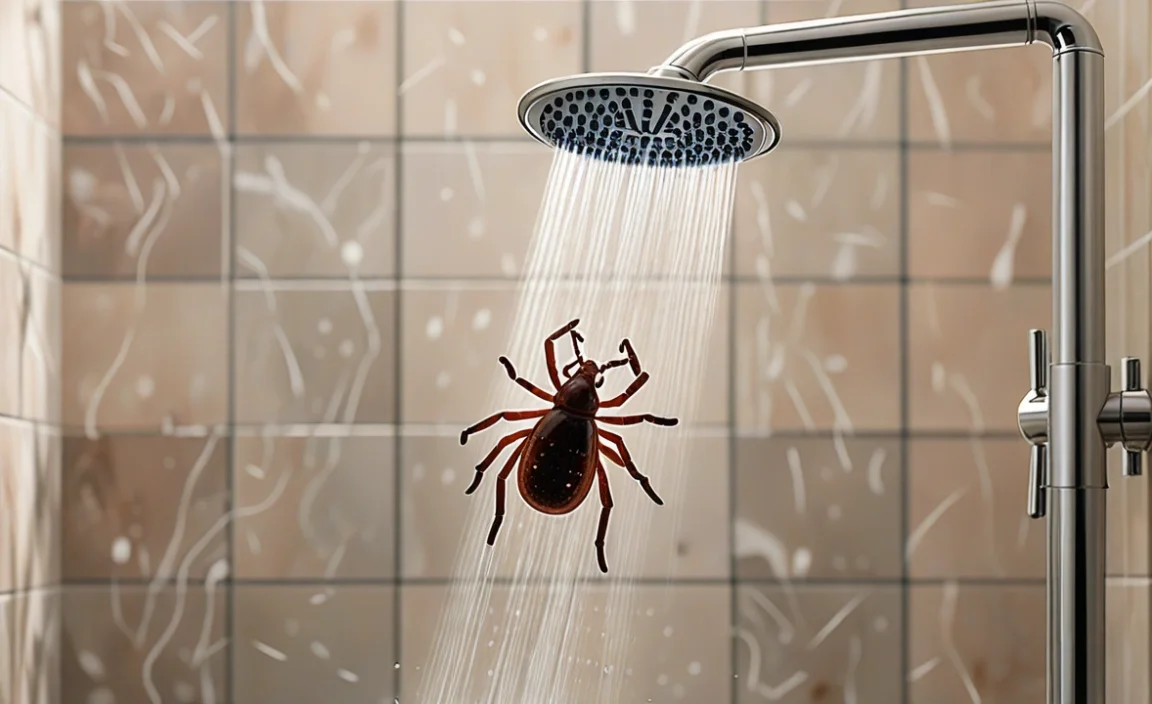
Do different types of ticks behave differently? Yes, different types of ticks have different behaviors. Some ticks are more aggressive than others. Some ticks prefer certain hosts, like deer or mice. The blacklegged tick, also known as the deer tick, is known for carrying Lyme disease. The American dog tick is another common type of tick. It can transmit diseases like Rocky Mountain spotted fever. Knowing the types of ticks in your area can help you protect yourself. Each type has different habits and risks.
- Different ticks have different behaviors.
- Some ticks are more aggressive than others.
- Some ticks prefer certain hosts.
- The blacklegged tick carries Lyme disease.
- The American dog tick can transmit Rocky Mountain spotted fever.
- Knowing the types of ticks in your area is important.
Imagine a group of animals. Some animals are shy and hide. Others are bold and approach you. Ticks are similar. Some ticks wait patiently for a host. Others actively seek out a host. Knowing the behavior of different ticks can help you avoid them. For example, if you know that deer ticks are common in your area, you can take extra precautions when walking in wooded areas.
Blacklegged Tick (Deer Tick)
The blacklegged tick, also known as the deer tick, is a common type of tick. It is known for transmitting Lyme disease. Lyme disease can cause a rash, fever, and fatigue. If left untreated, it can lead to more serious problems. Blacklegged ticks are small and can be hard to spot. They are often found in wooded areas and tall grass. Protect yourself by wearing long sleeves and pants. Use insect repellent and check yourself for ticks after being outside.
American Dog Tick
The American dog tick is another common type of tick. It is larger than the blacklegged tick. American dog ticks can transmit diseases like Rocky Mountain spotted fever. Rocky Mountain spotted fever can cause a fever, headache, and rash. It is important to get treated quickly if you have this disease. American dog ticks are often found in grassy areas and along roadsides. Protect yourself by avoiding these areas. Use insect repellent and check yourself for ticks after being outside.
Lone Star Tick
The Lone Star tick is named for the white spot on its back. It is found in the southeastern United States. Lone Star ticks can transmit diseases like ehrlichiosis. They are known to be very aggressive. They will actively seek out a host. Protect yourself by wearing long sleeves and pants. Use insect repellent and check yourself for ticks after being outside. Be extra careful in areas where Lone Star ticks are common.
Fun Fact or Stat: Ticks can sense carbon dioxide, so they know when a human or animal is nearby!
Can Natural Remedies Help Remove Ticks?
Can natural remedies help remove ticks? Some people believe that natural remedies can help remove ticks. These remedies include things like essential oils and petroleum jelly. However, there is not much scientific evidence to support these claims. The best way to remove a tick is with fine-tipped tweezers. Grip the tick close to your skin and pull it straight out. Do not twist or jerk the tick. Natural remedies might not be effective and could waste time. Always use the recommended method for tick removal.
- Some people use natural remedies to remove ticks.
- These remedies include essential oils and petroleum jelly.
- There is not much scientific evidence to support these claims.
- The best way to remove a tick is with tweezers.
- Do not twist or jerk the tick.
- Natural remedies might not be effective.
Imagine you have a splinter in your finger. Some people might suggest putting butter on it. Others might say to use tape. But the best way to remove a splinter is with tweezers. Ticks are similar. Some people might suggest using natural remedies. But the best way to remove a tick is with tweezers. Always use the recommended method for the best results.
Essential Oils for Tick Removal
Some people use essential oils for tick removal. Oils like peppermint, tea tree, and eucalyptus are said to repel ticks. However, there is little scientific evidence to support this. Essential oils might not be strong enough to remove an attached tick. They might also irritate your skin. The best way to remove a tick is with tweezers. Essential oils might be helpful for repelling ticks. But they are not a substitute for proper tick removal.
Petroleum Jelly for Tick Removal
Some people use petroleum jelly to try to smother ticks. The idea is that the jelly will block the tick’s air supply. This will cause it to detach. However, this method is not effective. Ticks can survive for a long time without air. Applying petroleum jelly might also make it harder to remove the tick with tweezers. The best way to remove a tick is to grip it close to your skin and pull it straight out. Petroleum jelly is not a recommended method for tick removal.
Other Home Remedies
Other home remedies for tick removal include things like nail polish and rubbing alcohol. These methods are also not effective. Nail polish might not smother the tick. Rubbing alcohol might irritate your skin. The best way to remove a tick is with tweezers. Grip the tick close to your skin and pull it straight out. Home remedies might waste time and could be harmful. Always use the recommended method for tick removal.
Fun Fact or Stat: Ticks are arachnids, making them relatives of spiders and scorpions!
What If the Tick’s Head Stays in the Skin?
What if the tick’s head stays in the skin after you remove the tick? This can happen if you twist or jerk the tick. The mouthparts can break off and remain in your skin. Don’t panic if this happens. Try to remove the remaining parts with tweezers. If you can’t remove them, clean the area with soap and water. Your body will usually get rid of the remaining parts on its own. Watch for signs of infection, such as redness, swelling, or pus. If you develop an infection, see a doctor.
- The tick’s head can stay in the skin if you twist or jerk it.
- Try to remove the remaining parts with tweezers.
- If you can’t remove them, clean the area with soap and water.
- Your body will usually get rid of the remaining parts.
- Watch for signs of infection.
- See a doctor if you develop an infection.
Imagine you are pulling a weed. The roots break off and stay in the ground. You try to dig them out with a small shovel. If you can’t get them all, you leave them alone. The remaining roots will usually decompose on their own. A tick’s head is like the roots of a weed. Try to remove it, but don’t worry too much if you can’t. Your body will usually take care of it.
Trying to Remove the Head
If the tick’s head stays in your skin, try to remove it. Use fine-tipped tweezers to grip the remaining parts. Try to pull them out gently. Be careful not to damage your skin. If you can’t remove the head easily, don’t force it. You could cause more damage. Clean the area with soap and water. Let your body take care of the rest. Trying to remove the head is a good idea. But don’t cause more harm than good.
Cleaning the Area
Cleaning the area is important, even if you can’t remove the tick’s head. Wash the area with soap and water. This will help prevent infection. You can also apply an antiseptic ointment. This will help kill any germs that might be present. Keep the area clean and dry. Watch for signs of infection, such as redness, swelling, or pus. Cleaning the area is a simple way to protect yourself from infection.
Watching for Infection
Watching for infection is very important. Even if you remove the entire tick, the bite area can still get infected. Look for signs of infection, such as redness, swelling, or pus. If you develop these symptoms, see a doctor. A doctor can prescribe antibiotics to treat the infection. Don’t ignore signs of infection. Early treatment can prevent serious problems. Pay attention to your body and seek medical attention if needed.
Fun Fact or Stat: Ticks are found all over the world, except for Antarctica!
Summary
Ticks can be a nuisance and carry diseases. Taking precautions is important. Wearing protective clothing and using insect repellent can help. Checking your body for ticks after being outside is also crucial. Do showers remove ticks? Showers can wash away unattached ticks, but they are not effective at removing attached ones. Use tweezers to remove attached ticks carefully. Clean the bite area with soap and water. Watch for signs of infection. Preventing tick bites is the best way to stay safe.
Conclusion
Ticks are a common problem, especially during warm months. Protecting yourself and your family is important. Remember to wear protective clothing and use insect repellent. Always check for ticks after spending time outdoors. Do showers remove ticks? They can help wash away unattached ticks, but they are not a substitute for a thorough tick check and proper removal with tweezers. Stay vigilant and enjoy your time outside safely.
Frequently Asked Questions
Question No 1: Can ticks jump or fly onto me?
Answer: No, ticks cannot jump or fly. They crawl onto you from grass, bushes, or leaf litter. Ticks use a behavior called “questing.” They hold onto leaves and grass with their back legs. They reach out with their front legs, waiting to grab onto a passing host. This is why it’s important to stay on trails and avoid brushing against vegetation. Wearing long pants and tucking them into your socks can also help prevent ticks from crawling onto your skin. Remember, ticks are patient and persistent. They will wait for the right opportunity to attach to you.
Question No 2: What diseases can ticks transmit?
Answer: Ticks can transmit several diseases. Lyme disease is one of the most common. Other diseases include Rocky Mountain spotted fever, ehrlichiosis, and anaplasmosis. The specific diseases depend on the type of tick and the region you live in. Symptoms of tick-borne diseases can include fever, headache, rash, and fatigue. If you develop these symptoms after a tick bite, see a doctor right away. Early treatment is important to prevent serious complications. Protecting yourself from tick bites is the best way to avoid these diseases. Remember to take precautions when spending time outdoors.
Question No 3: How long does a tick need to be attached to transmit disease?
Answer: The amount of time a tick needs to be attached to transmit disease varies. For Lyme disease, a tick usually needs to be attached for at least 24 to 48 hours. Other diseases can be transmitted more quickly. This is why it is important to remove ticks as soon as you find them. The sooner you remove a tick, the lower your risk of getting a disease. Checking yourself for ticks regularly can help you find and remove them quickly. Remember, prompt tick removal is key to preventing tick-borne illnesses. Do showers remove ticks before they attach? They might help, but checking is vital.
Question No 4: Can I use heat to remove a tick?
Answer: No, you should not use heat to remove a tick. Some people believe that burning a tick with a match or lighter will cause it to detach. However, this is not a safe or effective method. Burning a tick can cause it to release more saliva, which could increase your risk of getting a disease. It can also burn your skin. The best way to remove a tick is with fine-tipped tweezers. Grip the tick close to your skin and pull it straight out. Do not twist or jerk the tick. Using heat can be dangerous and is not recommended.
Question No 5: What should I do with the tick after I remove it?
Answer: After you remove a tick, you have a few options. You can put it in a sealed bag or container. You can also flush it down the toilet. If you choose to save the tick, you can put it in a freezer. This is in case you need to show it to a doctor. If you develop symptoms of a tick-borne disease, your doctor might want to identify the type of tick. Knowing the type of tick can help them determine the best course of treatment. Do showers remove ticks? No, but proper tick disposal prevents re-attachment. Always wash your hands after handling a tick.
Question No 6: Are there vaccines for tick-borne diseases?
Answer: Currently, there is no vaccine available for Lyme disease for humans in the United States. There is a vaccine for Lyme disease for dogs. Researchers are working on developing a vaccine for humans. In the meantime, the best way to prevent Lyme disease is to avoid tick bites. Wear protective clothing, use insect repellent, and check yourself for ticks regularly. Some other tick-borne diseases, like Rocky Mountain spotted fever, do not have vaccines. Preventing tick bites is the best way to protect yourself from all tick-borne diseases. Remember, do showers remove ticks? They help with unattached ones, but prevention is key.

